
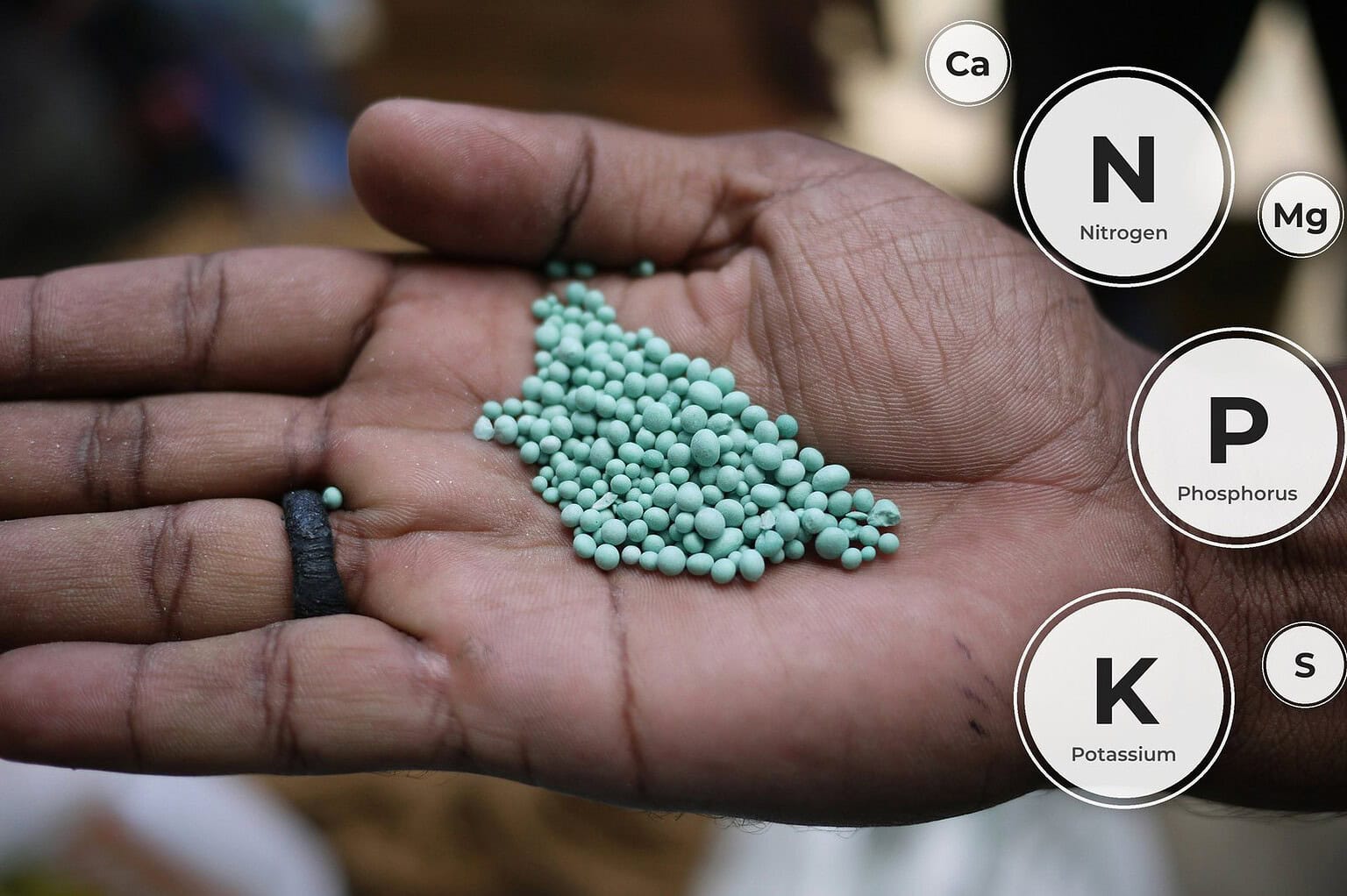
The entry into force of the Law establishing the National Policy on Critical and Strategic Minerals (PNMCE) and the National Council for the Industrialization of Critical and Strategic Minerals (CIMCE) has, as one of its strategic purposes, ensuring the country’s food sovereignty.
To that end, it requires the PNMCE to be carried out in coordination with the National Fertilizer Plan, recognizing and encouraging a direct relationship between mineral security and food and nutritional security. This relationship is addressed by the express inclusion of phosphate, potash and nitrogen fertilizers among the products that will receive priority incentives.
The industrial chain needed for food sovereignty and the policies for the sustainable development of strategic minerals and rare earths in domestic fertilizer production is a topic already on the agenda of Instituto Diálogos seminars for March 2027.
The National Confederation of Agriculture reported in August 2026 that 92% of the fertilizers consumed in Brazilian agriculture in 2025 were imported. According to the CNA, the fertilizer issue goes beyond the rural economy; it is also a matter of food security, competitiveness, trade balance and national security.
According to official data from the Foreign Trade Secretariat (Secex) of the Ministry of Development, Industry, Trade and Services (MDIC), imports of chemical and other fertilizers reached 45.5 million tonnes in 2025, at a cost equivalent to about R$ 87 billion.
Tax incentives
One of the mechanisms of the new Law is the Federal Program for the Beneficiation and Transformation of Critical and Strategic Minerals (PFMCE), a source of funding to promote mineral beneficiation and transformation and urban mining through a tax credit that may reach 20% of deductible expenses.
The planned tax credit has overall limits, covering all production chains and not just fertilizers, of up to R$ 1 billion a year between 2030 and 2034, for a total of up to R$ 5 billion. It will not be granted automatically: it will depend on project qualification, and the credit percentage must take into account the degree of value added within the country.
Guarantees for projects
To implement the PNMCE, the federal government will create the Mining Activity Guarantee Fund (FGAM), capped at R$ 2 billion, in which it may take part as a shareholder, with the aim of providing guarantees to projects and activities linked to the production of minerals defined by Law No. 15,506/2026.
The fund, which will also accept the participation of states, municipalities and, mandatorily, the private sector, aims to offer guarantees to projects related to the production of critical and strategic minerals, and it may also help mitigate credit and liquidity risks.
Research and innovation
The law also requires companies engaged in the exploration, mining, beneficiation and transformation of critical or strategic minerals covered by the PNMCE to allocate funds to research, development and innovation.
During the first six years after regulation, a minimum of 0.3% of gross operating revenue, net of applicable taxes, is provided for research, development and innovation projects, plus 0.2% to pay up FGAM shares. From the 7th year on, 0.5% is to be invested exclusively in RD&I.
Mineral exploration, beneficiation, transformation, decarbonization, sustainability, recovery of degraded areas, the circular economy and logistics infrastructure may receive these funds.
National Fertilizer Plan
The National Fertilizer Plan (PNF), launched through Decree No. 10,991/2022, has 2050 as its planning horizon, by which time domestic production should meet between 45% and 50% of demand. And it should be understood not only as a policy for the sustainable development of agribusiness, but also as one of economic and food sovereignty.

The PNF’s guidelines include securing inputs for agricultural production and reducing vulnerability to external crises, with the resulting reduction in currency exposure and import costs. The scope of its results also covers the development of Brazil’s large mineral reserves, job creation, investment in research and the development of new technologies.
The PNF aims to attract US$ 10 billion in private investment to expand nitrogen fertilizer manufacturing by 2030, with new investment cycles in the following decades.