
The international landscape is undergoing a profound transformation. Trade relations, production chains, energy security and the geopolitical balance have come to operate in an increasingly interconnected way — and understanding these changes is central to Brazil’s strategic challenges.
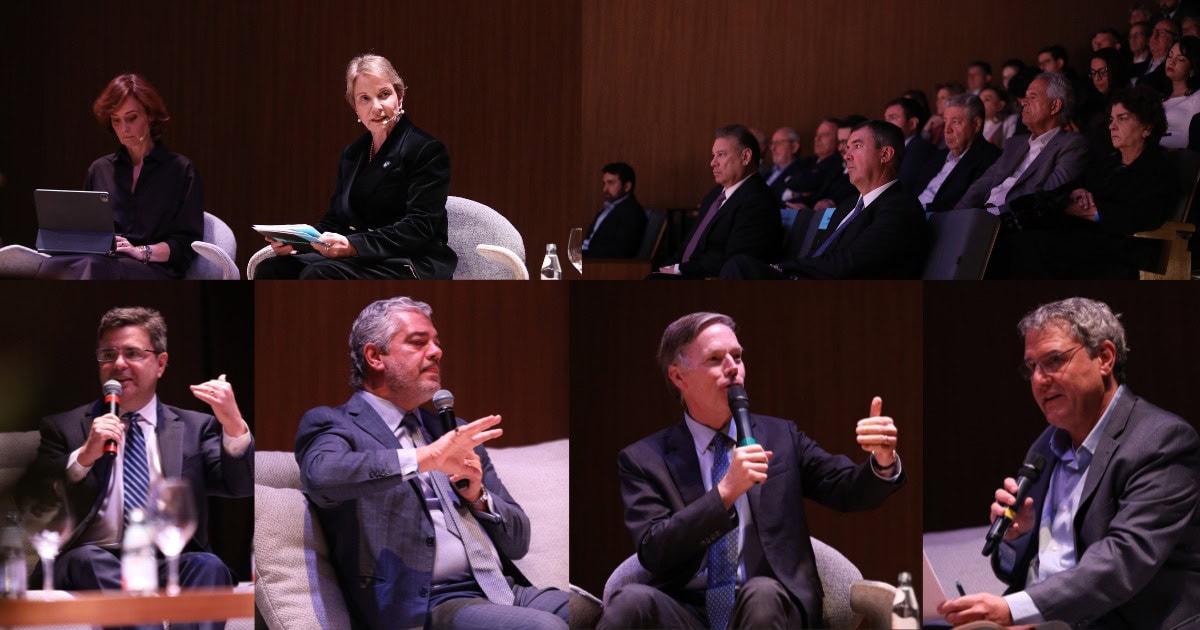
It was with this in mind that Instituto Diálogos held the seminar “The New Global Geoeconomics” in São Paulo on June 9, bringing together Brazilian and international experts to discuss the impact of global reorganization on the economy, politics, trade, energy and food security.
The event was opened by Senator Tereza Cristina, Chair of the Board of Directors of Instituto Diálogos, who highlighted the Institute’s aim of fostering a permanent space for dialogue and strategic reflection on the country’s future.
“Instituto Diálogos was created so that we can once again think strategically about Brazil,” she said.
Throughout the seminar, the debates showed how issues once treated separately have become part of the same global dynamic. Competition for food, energy, strategic minerals, technology and political influence is now redefining alliances, repositioning production chains and increasing the need for countries to adapt to a more competitive and less predictable international environment.
The first panel brought together Marcos Jank, an expert in global agribusiness and food security; Marcos Troyjo, former president of the BRICS New Development Bank; and Ricardo Zúñiga, former White House adviser for Latin America and former U.S. consul in São Paulo, moderated by journalist Thaís Herédia.
The discussions addressed the strategic role of commodities, the impact of the dispute between the United States and China on global trade and investment, and the challenges facing emerging countries amid the reorganization of international supply chains.
From different perspectives, the participants agreed that Brazil holds a relevant position in this new geoeconomic context — particularly because of its capacity to operate in strategic sectors such as agribusiness, energy and minerals.
“Brazil is an inevitable partner for the United States,” said Ricardo Zúñiga.
The second panel featured Nicholas Burns, a professor at the Harvard Kennedy School and former U.S. ambassador to China and to NATO. In his analysis of the changes in the international order, Burns discussed the challenges in the relationship between the United States and China, the impact of geopolitical fragmentation and the need to build new mechanisms for international cooperation.
“We need to think about a new world order for 2040,” he said.
The discussions also underscored the importance of expanding Brazil’s capacity to understand long-term global trends and of strengthening its strategies for international engagement in a context marked by rapid change and growing interdependence among the economy, geopolitics and development.
The seminar marked the start of Instituto Diálogos’ public agenda, which will continue to promote meetings, debates and content aimed at informed reflection on the major national and international issues that affect Brazil’s future.