
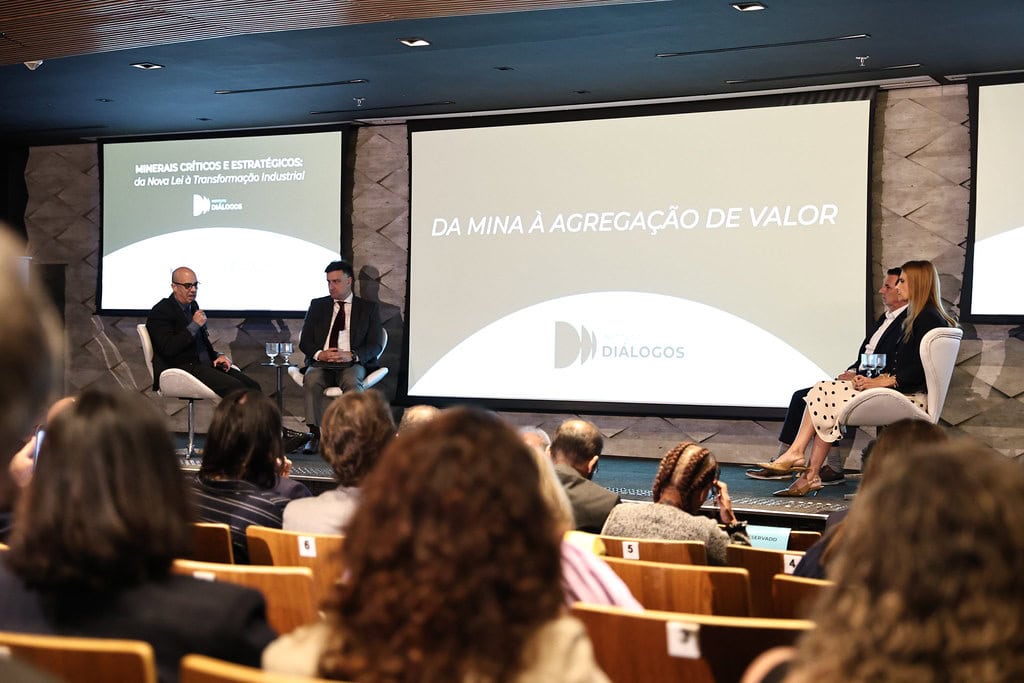
At an Instituto Diálogos seminar, leaders of IBRAM and the Critical Minerals Association and a SENAI researcher highlight the challenges of financing, technological mastery and the competitiveness of production chains in Brazil.
The role of critical minerals in Brazil’s industrial transformation and the ways to increase value added to mineral production were the focus of the seminar “Critical Minerals: From the New Law to Industrial Transformation,” organized by Instituto Diálogos. On October 8, in Brasília (DF), the event brought together representatives of government, the productive sector and research to discuss the challenges and opportunities of the strategic use of mineral resources in light of changes in the global economy.
During the panel “From mine to value added: Brazil’s framework in light of international best practices,” participants discussed the conditions needed for Brazil to move from mineral production to higher value-added stages, as well as issues related to the regulatory environment, innovation, technology and international experience in developing critical mineral chains.
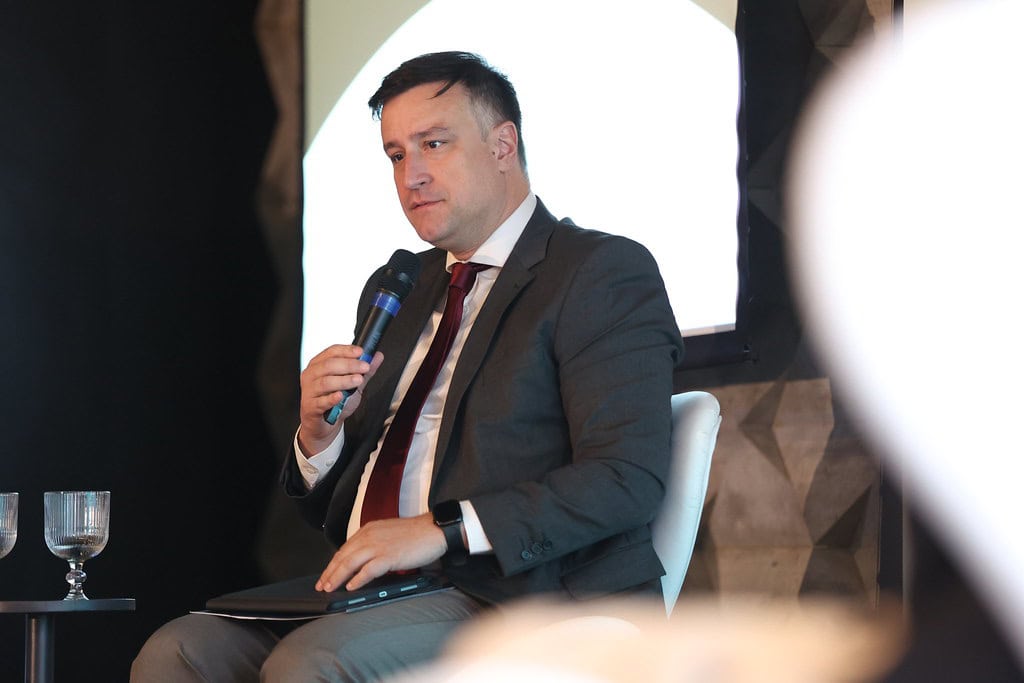
For Pablo Cesário, Director of Institutional Relations and interim CEO of the Brazilian Mining Institute (IBRAM), Brazil has already built an important foundation for a critical minerals policy, but needs to make progress on technology, financing and coordination. “We have a public policy structure. As a structure, I think it is one of the best in the world, but we still need to put weight on this building,” he said. According to him, policies must also take into account the particularities of each mineral chain. “Talking about copper, lithium or rare earths is not the same thing. There are different businesses within this group, and we will need specific tools for each mineral,” he said.
Cesário also called for greater integration between companies and research centers, with predictable, long-term financing. “The big challenge is more than knowing which plant will be where. It is knowing who masters the knowledge. It’s not the plant. It’s knowledge. That’s the game,” he said. In his view, Brazil also needs to take a more active role in international negotiations and use its industrial capacity to help define the rules of this market.
Investment and industrial transformation
Marisa César, Director of Corporate Affairs and Sustainability at PLS Brasil and Chair of the Board of Directors of the Critical Minerals Association, highlighted the volume of resources needed to develop these chains. “When we talk about critical minerals, we are talking about a chain that requires a high level of investment. This investment often comes from foreign investors,” she said.
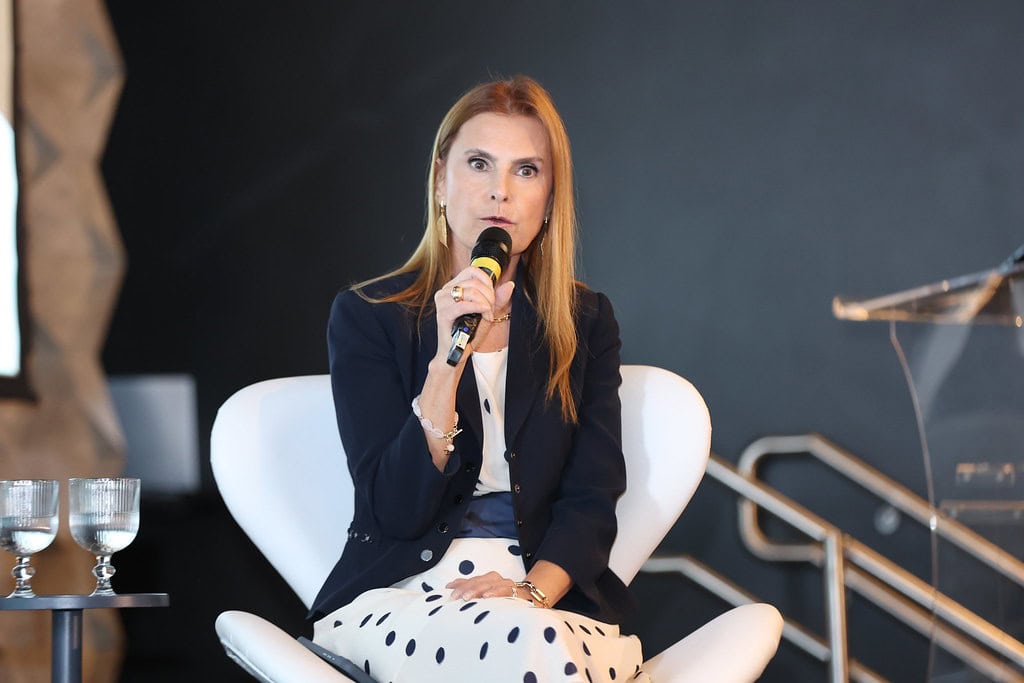
She also pointed to the costs involved in mineral transformation in the country. “Brazil has potential and has aspects that are very positive. The energy mix is very positive, but one of the complexities we face is the high cost of importing chemical reagents,” she said.
For Marcos Berton, Technology and Innovation Manager and chief researcher at the SENAI Institute for Innovation in Electrochemistry, Brazil’s challenge is to turn knowledge and mineral resources into an industry capable of competing in specific markets. “For the first time, we are talking about industrial transformation: about how we move beyond this extremely important role in mineral production and turn this movement into an industry,” he said.
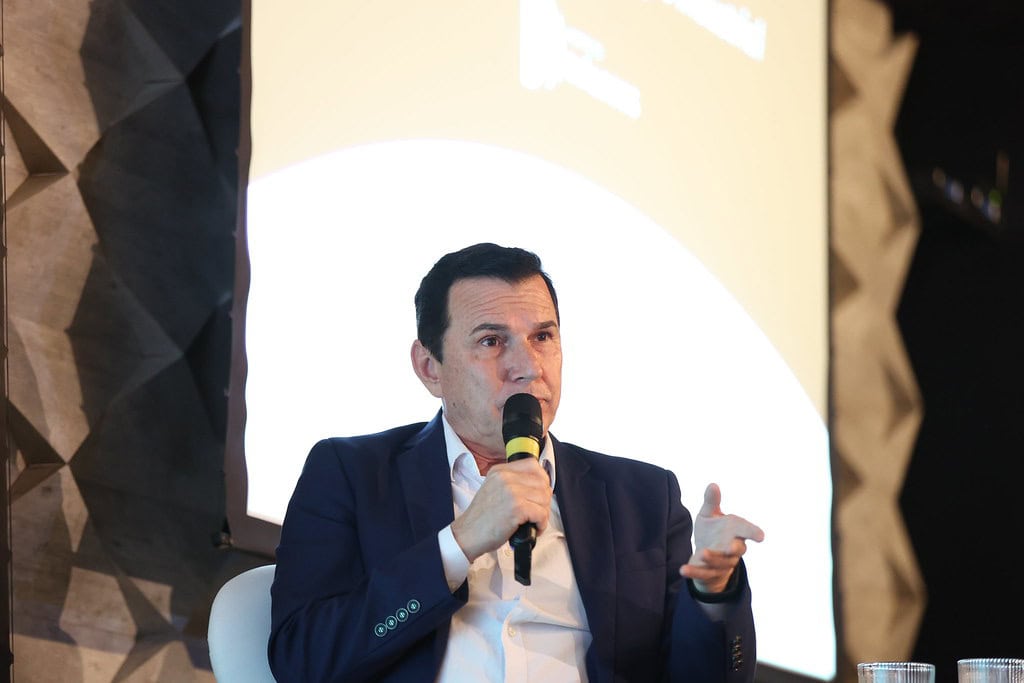
Berton highlighted initiatives to develop a lithium-ion battery production chain in Brazil, but called for greater coordination of efforts. “We lack national coordination to lead this, to give it direction. We need focus,” he said. In his view, incentives should also keep pace with progress along the value chain. “The greater the progress, the further you advance in this chain, the greater the incentive you should receive.”
Value added and global competition
The panel moderator, Rodrigo Toledo Cabral Cota, former director of the Department of Mineral Transformation and Technology at the Ministry of Mines and Energy, noted that the discussion on critical minerals covers, beyond mining, sectors such as artificial intelligence, energy, defense and aerospace technology. In his view, the chain runs through extraction and beneficiation, mineral transformation and, later, the manufacture of products such as batteries, solar panels and vehicles.
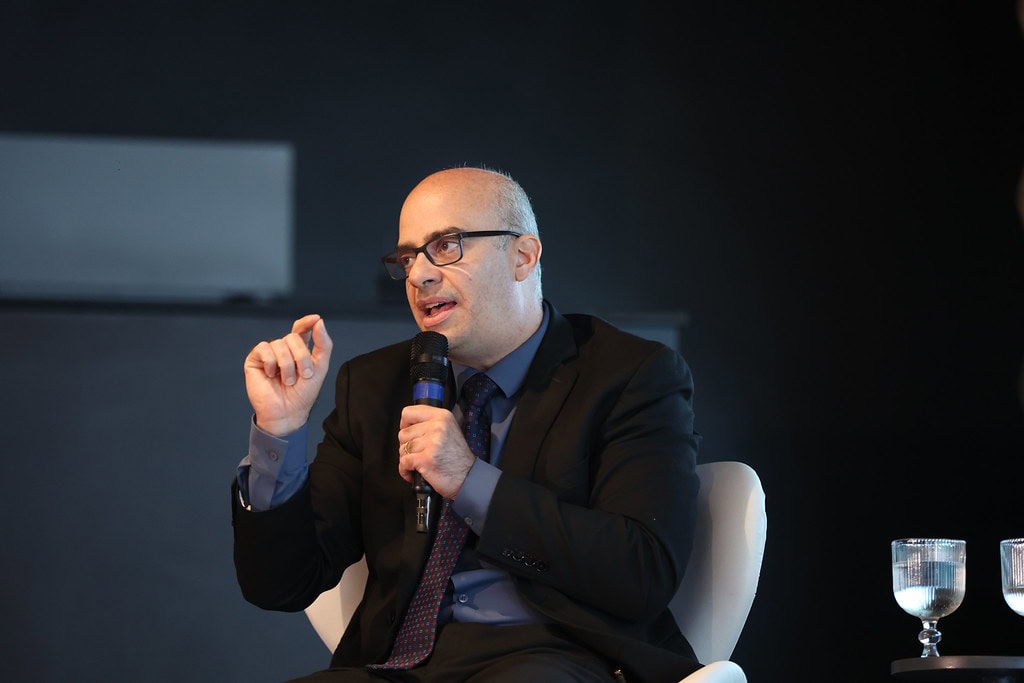
Cota stressed that adding value must also take the competitiveness of the business into account. “Especially when industry suffers from competition from China, adding value to the product does not always mean adding value to the business,” he said. According to him, Brazil’s challenge is to develop technology and conditions to strengthen the mineral transformation stage outside China, where the sector receives strong state support.
At the end of the debate, participants agreed on the opportunity to expand Brazil’s presence in global critical mineral chains and on the need to develop industrial and technological capacity in the country. This requires long-term investment in research, innovation and infrastructure, as well as greater coordination among government, companies and research centers, and partnerships with countries that already master specific technologies. The creation of mineral transformation hubs was also pointed out as a way to bring together companies and technology, increase value added and accelerate the development of these chains in the country.
The seminar was sponsored by the Brazilian Mining Institute (IBRAM) and the Brazilian Confederation of Agriculture and Livestock (CNA), through the Senar CNA System. Vallya Consulting and the Brazilian Center for International Relations (CEBRI) supported the organization of the seminar program.