
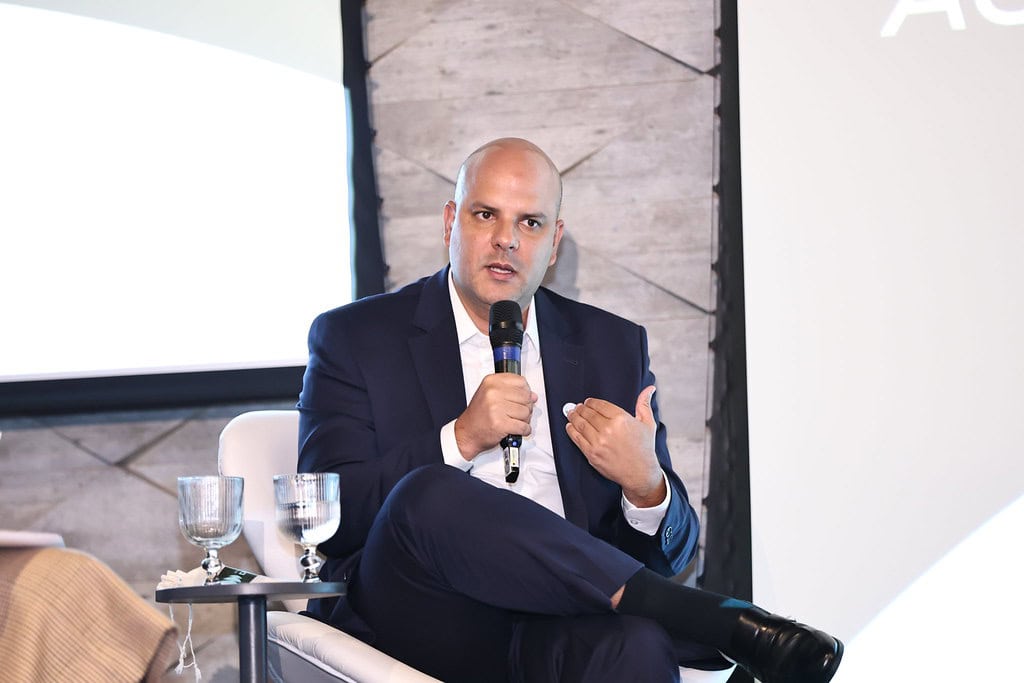
AMC’s Executive Director points to investment of at least R$ 60 billion in the coming years and calls for clear regulatory criteria, financing and incentives for the sector.
The Executive Director of the Critical Minerals Association (AMC), Frederico Bedran, called for clear criteria for reviewing transactions in the sector, so that regulatory requirements do not hinder project development and fundraising. He made the remarks during his participation in the seminar “Critical Minerals: From the New Law to Industrial Transformation,” organized by Instituto Diálogos on October 8 in Brasília.
Bedran addressed the challenges of structuring critical and strategic mineral chains in Brazil, the role of government in supporting projects and the criteria applicable to the sector’s transactions. He noted that adding value to mineral production in Brazil is already a consensus in the sector and pointed to the need to consider the particularities of each production chain.
Turning to rare earths, AMC’s Executive Director stressed that the challenge lies in defining how to expand Brazil’s participation in the different industrial stages, which range from mineral production to separation, metallization, magnet manufacturing and motor production.
In this process, Bedran considers it unfeasible to install a refinery at every rare earth project developed in Brazil. According to him, each venture and each production chain has its own characteristics that need to be considered when defining value-adding strategies.
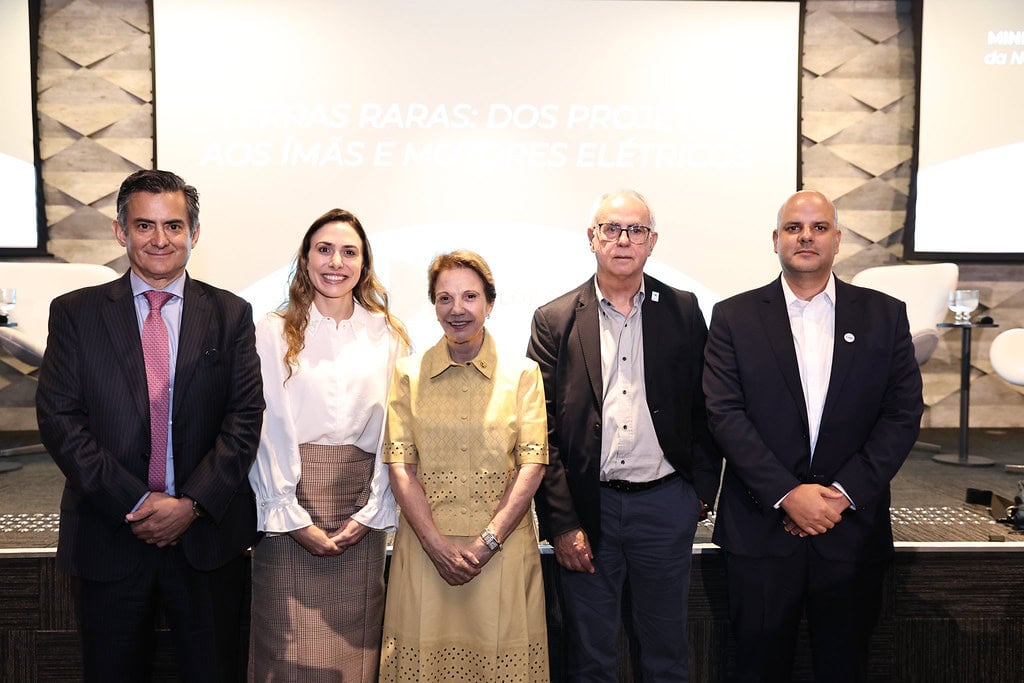
Bedran was one of the speakers on the panel “Rare earths: from projects to magnets and electric motors,” moderated by economist Rafaela Guedes, Senior Fellow at the Brazilian Center for International Relations (CEBRI). The other speakers were Julio Nery, Director of Mining Affairs and Sustainability at the Brazilian Mining Institute (IBRAM), and Jose Augusto Palma, Executive Vice President of Aclara Resources, a company developing a rare earth project in Goiás.
Criteria for reviewing transactions
Another point highlighted by Frederico Bedran was the definition of criteria for reviewing corporate transactions, financing contracts and foreign capital contributions. Bedran warned that subjecting all these transactions indiscriminately to validation processes could hinder fundraising and affect project development.
AMC’s Executive Director argued that the rules that will guide the work of the National Council for the Industrialization of Critical and Strategic Minerals (CIMCE) should set clear criteria to identify the transactions that require more in-depth review from the standpoint of national sovereignty. For the remaining cases, he proposed adopting an automatic filter.
According to Bedran, uncertainty about the rules applicable to the sector has led companies in the pre-operational phase to constantly renegotiate terms with their investors. He reported that more than 30 AMC member companies are at this stage and mentioned investment of at least R$ 60 billion in the coming years.
Financing and incentives for mineral exploration
Bedran also called for government action focused on supporting projects, without excessive intervention in the sector’s decisions. In the assessment presented at the seminar, instruments such as tax incentives and financing are especially relevant for projects in the exploration phase, which require financial resources over long periods. According to Bedran, the return on these investments can take about ten years.
For AMC’s Executive Director, financial and tax support for the exploration stages should be part of a strategy for the mining sector. He argued that the definition of the rules applicable to projects and corporate transactions should preserve the conditions needed for the development of ventures, without imposing excessive controls on the market.
The seminar was sponsored by the Brazilian Mining Institute (IBRAM) and the Brazilian Confederation of Agriculture and Livestock (CNA), through the Senar CNA System. Vallya Consulting and the Brazilian Center for International Relations (CEBRI) supported the organization of the seminar program.