
A high-level meeting on October 8 in Brasília will bring together officials, experts and representatives of the productive sector to discuss Brazil’s next steps in the critical and strategic minerals chain, while the national policy for these minerals is being regulated.
Critical and strategic minerals have gained economic, technological and geopolitical importance with the energy transition, the advance of new technologies and changes in global production chains. Lithium, nickel, graphite, copper, niobium and rare earth elements are used in batteries, electric motors, power generation and transmission, industrial equipment and other technologies relevant to today’s economy.
Brazil has significant mineral resources and already takes part in different stages of these chains. One of the country’s challenges is to expand the processing carried out in Brazil so as to convert its mineral potential into industrial capacity, technological development, investment, skilled jobs and greater value creation.
This will be the starting point of the seminar “Critical Minerals: From the New Law to Industrial Transformation,” which Instituto Diálogos will hold on October 8, 2026, in Brasília. The first in a series devoted to the topic, the meeting will bring together government, the productive sector, mining associations, technology centers and experts working directly on policymaking, project development and the different stages of the mineral chain.
At the end of the series, the discussions and conclusions will be summarized in a publication intended to guide public policymaking as well as private-sector initiatives.
The initiative reflects the goals that guide Instituto Diálogos. Nonpartisan and nonprofit, the Institute encourages pluralistic debate and the dissemination of knowledge on issues relevant to the country. Its mission is to help build a project for sustainable national development by bringing together the public, private and academic sectors.
“By putting critical minerals up for discussion at this moment, we want to help Brazil seize a concrete opportunity to add value to its resources, strengthen production chains and create the conditions for new investment, technological development and industrial expansion,” says Fernando Camargo, President of the Executive Board of Instituto Diálogos.
A new moment for critical minerals in Brazil
The seminar takes place just a few weeks after the enactment of Law No. 15,506/2026, which originated as Bill 2,780/2024. The legislation, which is now being regulated, establishes the National Policy on Critical and Strategic Minerals and defines instruments for its implementation.
The phase now beginning involves applying the instruments provided for in the law and making decisions that can influence mineral exploration, production, beneficiation, refining, processing and industrialization. Regulatory certainty, financing, attracting long-term capital and technological development are all part of this agenda.
Extraction is just one stage of the process. A significant share of the economic value can be captured in the subsequent phases, when mineral resources undergo beneficiation, refining, processing and transformation into industrial inputs, components and products.
In the industry, these phases are usually referred to as upstream, midstream and downstream. Upstream covers extraction and beneficiation. Midstream includes stages such as refining and chemical processing. Downstream comprises the manufacture of higher-value components and products. The ability to connect these stages is among the main challenges for developing Brazil’s critical and strategic minerals chain.
The country already has experience in adding value. In the niobium chain, it produces ferroniobium and other industrialized products. There has been progress in rare earth processing, although a significant part of this activity still remains at early and intermediate stages. Brazil also processes minerals used to produce fertilizers, a segment in which it remains highly dependent on imports.
The availability of mineral resources alone, therefore, does not determine a country’s place in a production chain. Technology, infrastructure, research, financing, regulatory stability and industrial capacity influence how much value can be generated from these resources.
From the new law to industrial transformation
The new legislation opens the way for a more precise discussion of how to turn the guidelines of the critical and strategic minerals policy into projects, investment and production capacity.
The seminar will address the relationship between the sector’s new institutional framework and initiatives such as New Industry Brazil, the Climate Plan and the Energy Transition Plan. The predictability needed for long-term investment will be one of the points of discussion.
Another focus will be the advance of mineral processing in Brazil. Moving from extracted ore to industrial inputs, components and products depends on technology and on economic conditions that vary from chain to chain.
Rare earths illustrate this complexity. Their elements are used to manufacture permanent magnets, electric motors and other components that require technological mastery and industrial scale.
Similar issues arise in the chains of minerals used in batteries, electrical equipment and technologies associated with the energy transition. The discussion about adding value concerns precisely the conditions under which a larger share of these activities can develop in Brazil.
A program that brings together different experiences
The lineup of speakers and moderators brings into the same discussion professionals involved in designing and implementing mineral policy, developing private projects, technological research, mining, industrial processing and economic analysis. This diversity will make it possible to compare different perspectives on the ways to expand the production and industrialization of critical minerals in Brazil.
The institutional opening will be given by Senator Tereza Cristina, Chair of the Board of Directors of Instituto Diálogos.
The Opening panel: overview of the sector will feature Caíque Souza, an independent consultant with Vallya Advisors, and Anderson Barreto Arruda, director of the Department of Mineral Processing and Technology and deputy to the National Secretary of Geology, Mining and Mineral Processing at the Ministry of Mines and Energy.
Next, the panel Rare earths in light of international experience: from mining projects to magnets and electric motors will bring together Frederico Bedran Oliveira, executive director of the Critical Minerals Association (AMC); André Luis Pimenta de Faria, coordinator of the SENAI Innovation and Technology Center for Rare Earth Magnets; and Pablo Cesário, director of Institutional Relations and Association Affairs and acting CEO of the Brazilian Mining Institute (IBRAM). It will be moderated by Rafaela Guedes, an economist and Senior Fellow at the Brazilian Center for International Relations (CEBRI).
The panel From mine to value added: Brazil’s framework in light of international best practices will feature Marcos Berton, Technology and Innovation manager and chief researcher at the SENAI Institute for Innovation in Electrochemistry, in Paraná; Marisa Cesar, director of Corporate Affairs and Sustainability at PLS Brasil and chair of the Board of Directors of the Critical Minerals Association; and Carlos Sarquis, Government Relations manager at Vale Base Metals.
It will be moderated by Rodrigo Toledo Cabral Cota, a civil servant on assignment to the Federal Senate and former director of the Department of Mineral Processing and Technology at the Ministry of Mines and Energy.
The seminar is sponsored by the Brazilian Mining Institute (IBRAM) and the Brazilian Confederation of Agriculture and Livestock (CNA).
EVENT DETAILS
Seminar “Critical Minerals: From the New Law to Industrial Transformation”
Date: October 8, 2026 Time: 9 a.m. to 12:30 p.m.
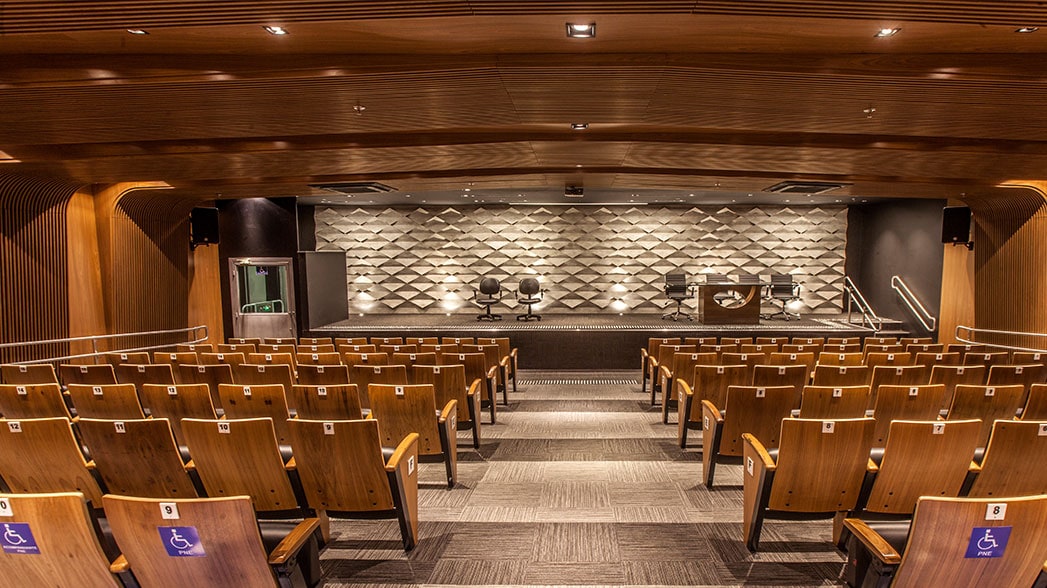
Venue: ION Building Auditorium, Asa Norte, Brasília, DF
View location on Google Maps
Program
9:30 a.m.
Institutional opening
Opening panel: Overview of the sector
Panel: “Rare earths in light of international experience: from mining projects to magnets and electric motors”
Panel: “From mine to value added: Brazil’s framework in light of international best practices”
12:30 p.m.
Closing
Registration
https://forms.gle/yhb6hQWtgbd93f6s6
Registration is subject to the auditorium’s capacity.
Seating is limited and there will be no livestream.